
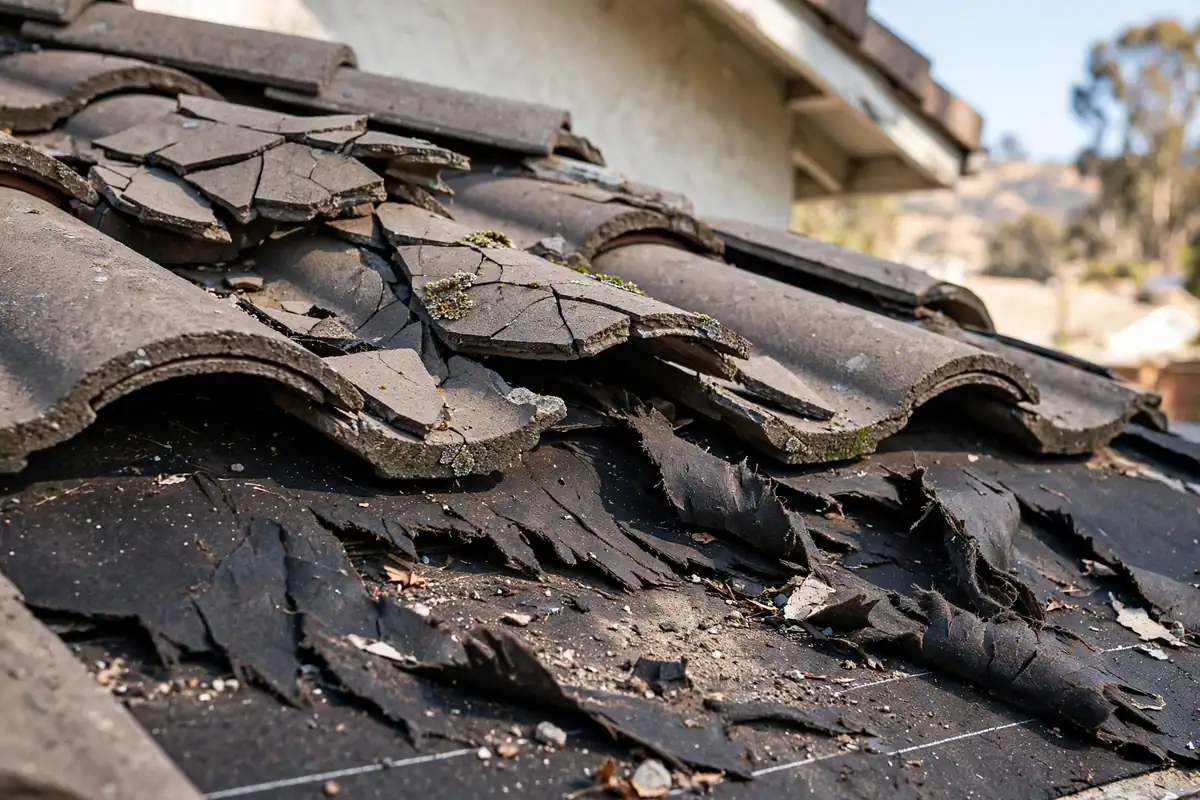
Valleys get overwhelmed
Valleys channel water from two slopes at once. In light rain they cope; in a NY gully-washer, a valley with worn lining, debris dams, or improper weaving can’t carry the volume — water backs up sideways under the shingles. If your leak sits below where two slopes meet, the valley is suspect number one.
Granule buildup and leaf debris are force multipliers: they turn a marginal valley into a dam. Annual valley clearing is the highest-value leak prevention a Levittown homeowner can buy.
Flashing joints fail under volume and wind
Flashing laps are designed to shed water flowing down — but heavy rain plus wind drives water uphill and sideways into laps that were merely adequate. Step flashing with short laps, aged sealant, or corroded sections holds in drizzle and surrenders in deluges.
This is why the leak appears at walls, chimneys, and skylights specifically during the worst storms — those are flashing junctions, and volume plus wind is their stress test.
Drainage bottlenecks back water up
Overflowing gutters, clogged downspouts, and flat-roof drains overwhelmed by volume push water where it was never meant to go — behind fascia, under edge shingles, across flat membranes. The roof didn’t fail; the drainage did.
On flat sections, ponding depth rises with rainfall intensity. A seam that stays dry under an inch of standing water fails under three — which is exactly why flat-roof leaks seem to come and go with storm severity.
What heavy-rain-only leaks mean for repair
The good news: these leaks usually have identifiable, fixable causes — valley rebuilds, flashing upgrades, drainage corrections — rather than systemic roof failure. The bad news: caulk-level fixes won’t survive the next downpour.
Our approach in Levittown is to repair for the worst storm, not the average one: proper laps, mechanical fastening, and verified drainage. Call (888) 974-0663 for a free assessment — our call representatives are available 24/7 for emergencies.
What Levittown Homeowners Should Do Next
If this guide matches what you are seeing at home, the next step is simple: get eyes on the actual roof before the next rain. In Hicksville, where dense post-war suburb: Capes, ranches, and split-levels packed tight around a major LIRR hub; population about 41,000, small issues turn into interior damage faster than most homeowners expect. A storm damage assessment visit gives you the full picture — entry point, extent, and options — with photos you can keep.
When you call (888) 974-0663, describe what you have noticed: where the stain is, when it appears, and which way the wind was blowing. That detail helps us aim the flashing checkup from the first minute. For storm damage leak repair in Hicksville specifically, see our storm damage leak repair in Hicksville page for how the local housing and weather change the work.
One more thing worth doing today: check your attic or top-floor closets with a flashlight. Fresh stains, damp insulation, or a musty smell all mean water is active. Note what you find — and if anything is actively dripping, call (888) 974-0663 now rather than waiting for morning.
Related Services
- Emergency Roof Leak Repair in Levittown
- Roof Leak Detection in Levittown
- Roof Flashing Repair in Levittown